Research
My research focuses on regional climate modelling and regional Earth system modelling, with the aim of better understanding regional climate processes, their interactions and their evolution in a changing climate.
My main geographical area of interest is the Euro-Mediterranean region and the Mediterranean Sea. My work spans model development, climate process understanding, the study of regional phenomena and extremes, and the production of regional climate information relevant for climate services and adaptation.
1. Regional climate modelling
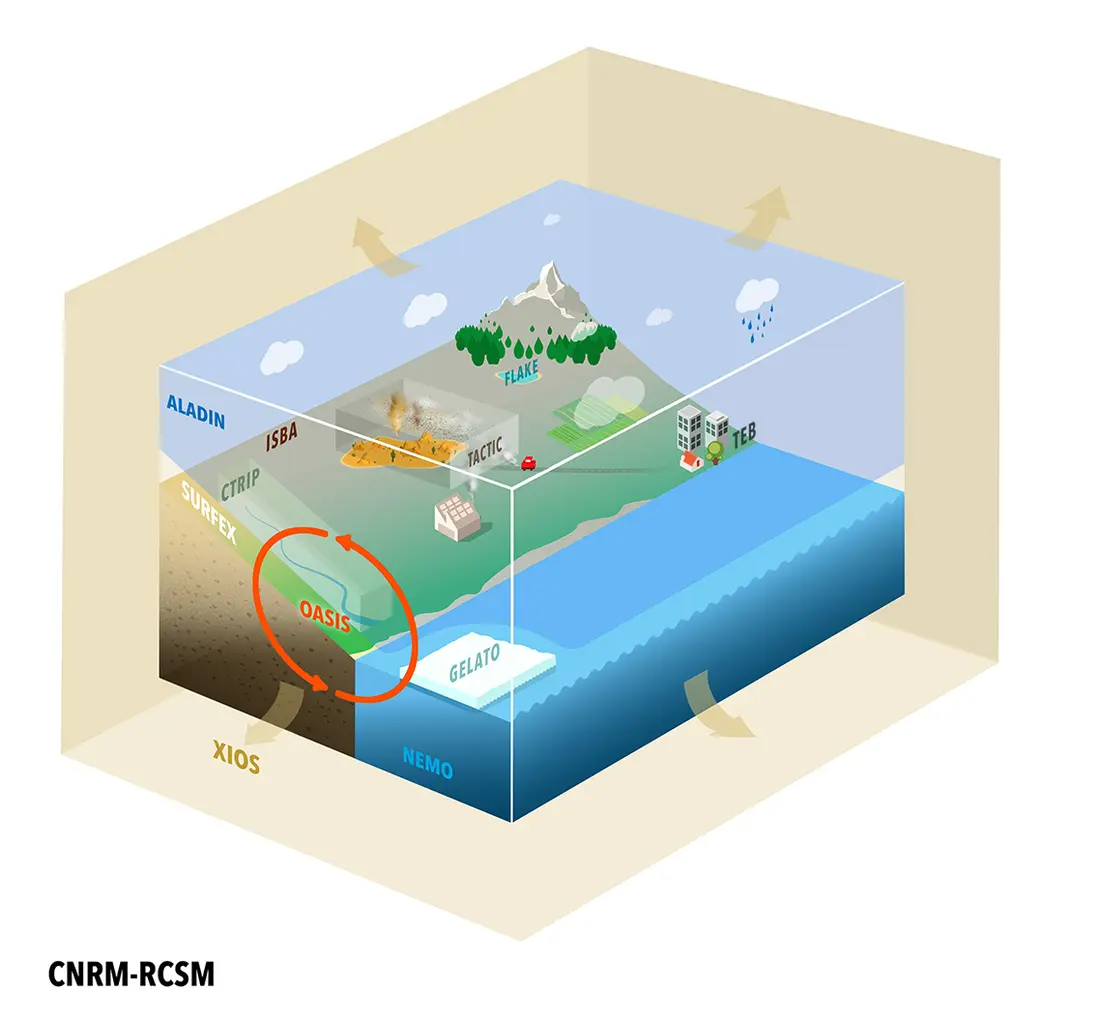
Regional climate modelling has been at the core of my research for more than 25 years. Within this field, a major focus of my work has been the development of coupled regional climate models, initially referred to as Regional Climate System Models (RCSMs) and increasingly as Regional Earth System Models (RESMs).
My approach has been to progressively extend regional atmospheric climate modelling by representing and coupling additional components of the regional Earth system. This includes in particular ocean–atmosphere coupling, but also the representation and coupling of rivers and aerosols.
These developments aim to represent regional interactions and feedbacks that cannot be captured when the different components of the climate system are considered independently. They provide the modelling framework on which much of my research on the Euro-Mediterranean climate is based.
2. Euro-Mediterranean climate and sea
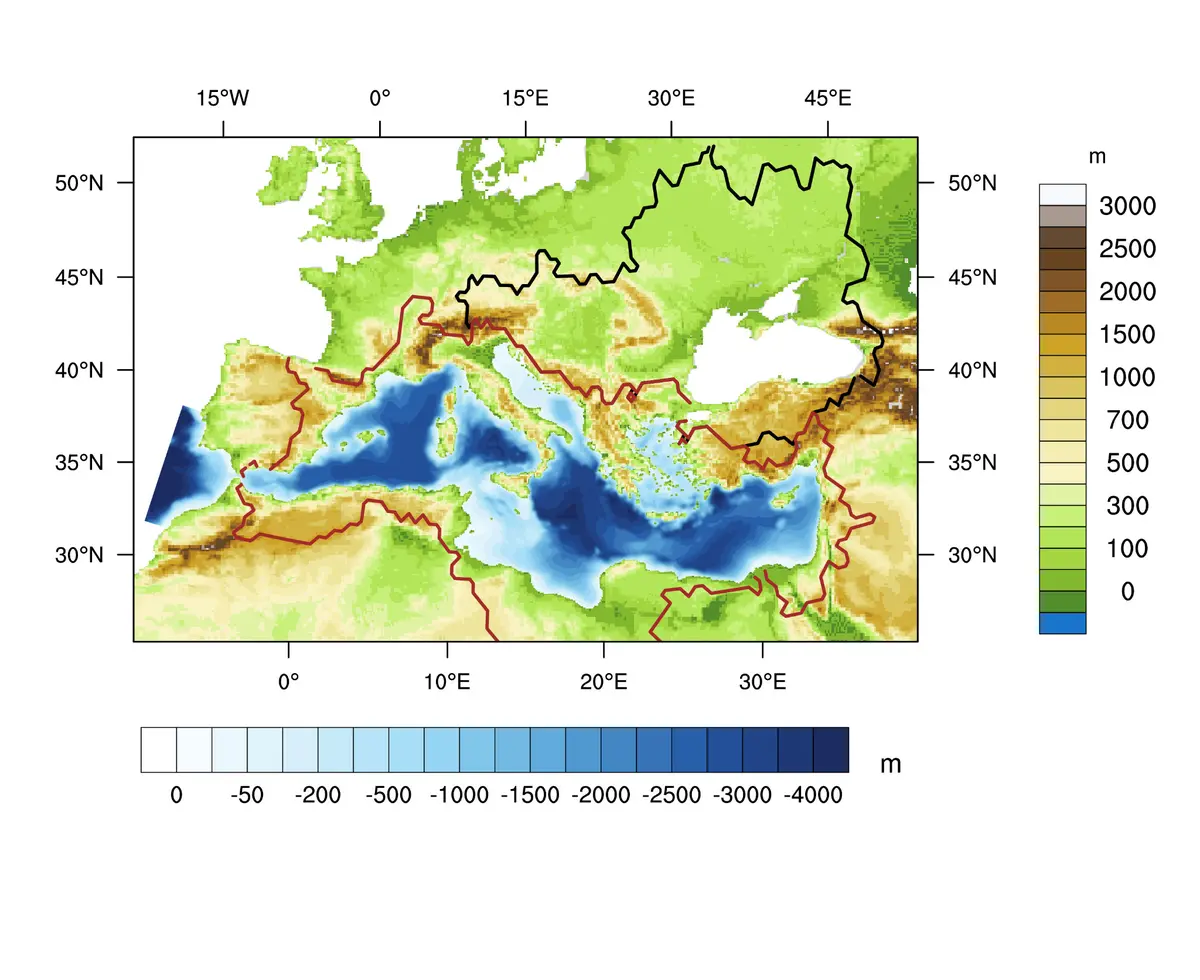
The Euro-Mediterranean region and the Mediterranean Sea constitute the main geographical focus of my research. I use regional climate models and observations to investigate the mechanisms controlling this regional climate, its past and present variability, and its future evolution under climate change.
My work addresses both atmospheric and oceanic aspects of the regional climate system. It includes the study of the Mediterranean thermohaline circulation, deep-water formation, and heat and water budgets, as well as atmosphere–ocean exchanges and the importance of ocean–atmosphere coupling for simulating Mediterranean climate.
I have also investigated other drivers of Euro-Mediterranean climate variability and change, including the role of aerosols and changes in land use. A central objective is to understand how these different components and forcings interact and contribute to observed and projected regional climate change.
3. Regional climate phenomena and extremes
Another part of my research focuses on regional climate phenomena and extreme events, and on the physical mechanisms controlling them.
This includes research on Mediterranean heavy-precipitation events and extreme precipitation, as well as regional atmospheric phenomena such as regional winds.
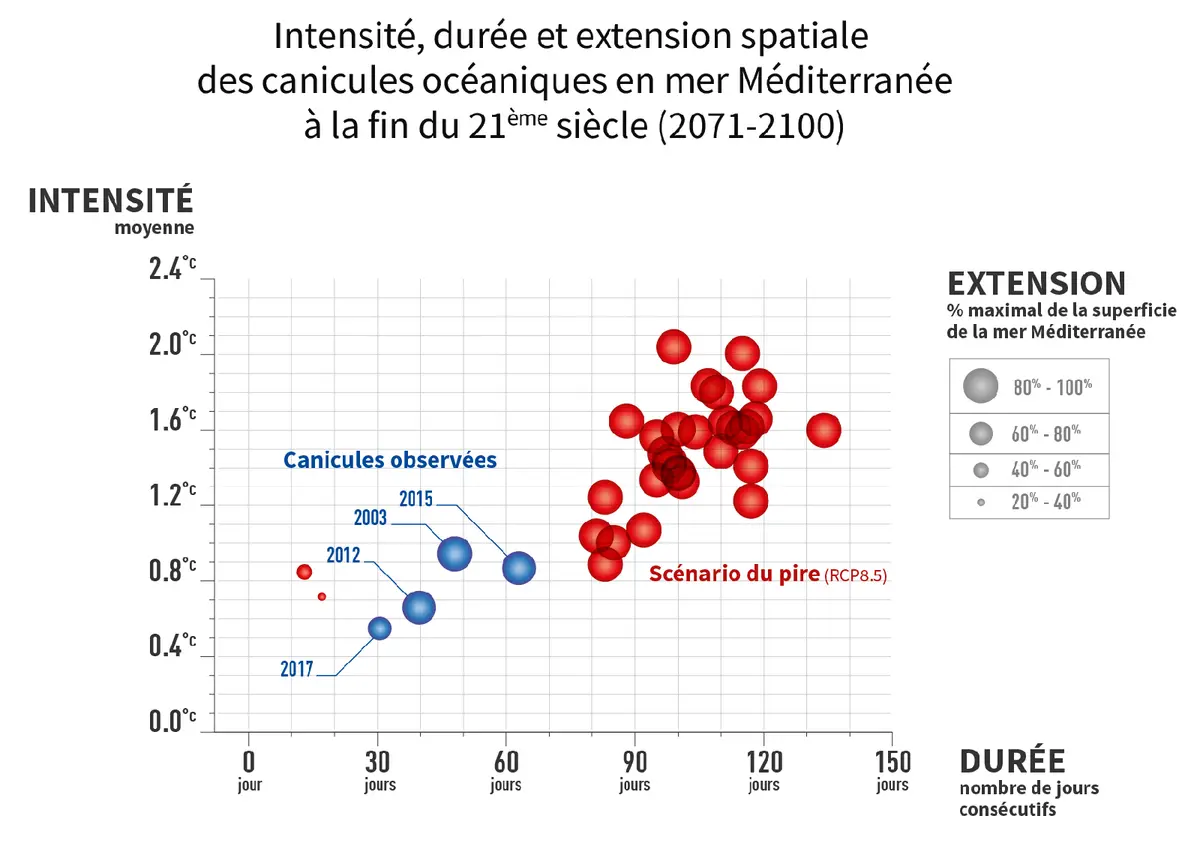
The same process-oriented approach extends to the ocean, including phenomena associated with deep-water formation, ocean convection and regional circulation. These studies seek to understand how regional phenomena emerge from interactions between large-scale climate conditions and regional atmospheric, oceanic and surface processes, and how they may evolve in a changing climate.
4. Regional climate information
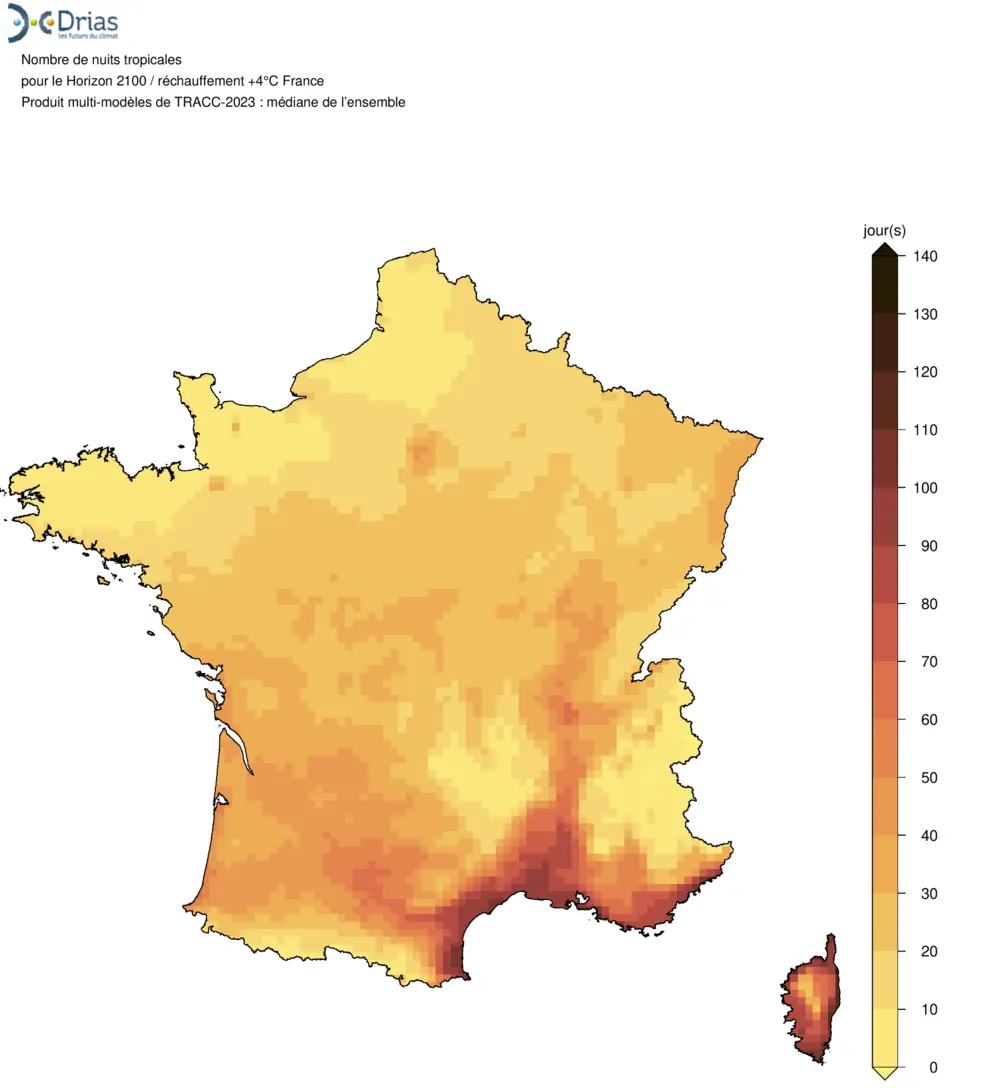
A significant part of my work concerns the production, evaluation and interpretation of regional climate information, particularly for Europe, the Mediterranean region and France.
This includes regional climate projections, the assessment of their uncertainties and added value, and the development of climate information at spatial and temporal scales relevant for impact and adaptation studies.
This research increasingly connects climate modelling with climate services, with the objective of making robust regional climate information available and understandable for users involved in climate-change impact assessment and adaptation, including at national and local scales.